Late Style in the Enterprise
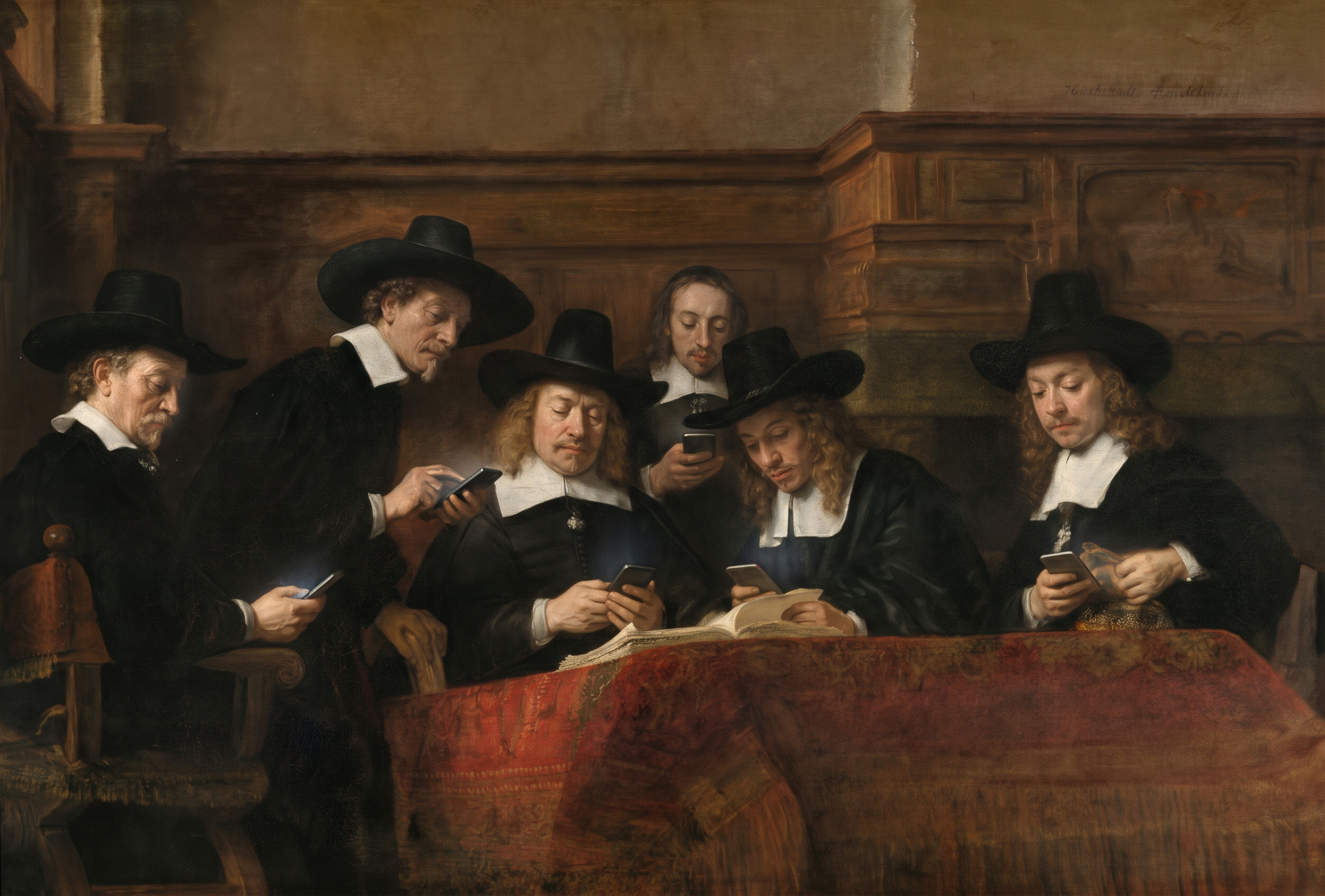
In art history, the concept of ‘late style’ refers to the distinct, often radical body of work an artist produces near the end of their life or career. Historically, old age in art was viewed as a phase of creative decline; the artist’s trajectory followed that of a clumsy ‘early’ period, a golden age, and an eventual ‘fizzling out’ until death. Modern interpretations (Adorno, Said, McMullan) reframe this late period as a profound one, marked by themes such as reconciliation and serenity (Shakespeare), or conversely, significant rupture and intransigence (Beethoven). There is also a third path - withdrawal - that characterizes the later years of some artists, as they retreat from public life and move towards creating inward-looking, deeply psychological pieces of work (Rembrandt, Cézanne).
A company may also possess a ‘late style’, although the binding constraint is that companies never face a definitive point of old age where their proximity towards the end suddenly colors their products and services with a sense of gravitas. At the same time, it is clear that companies have an aging process, oriented towards slower revenue growth, a shift towards cost efficiency, a focus on capital returns, and so on. Although a mature company can theoretically operate indefinitely, it still grapples with ‘mortality’ through making decisions to wind down different phases of its activity.
This can be seen in the company’s franchises, which are their distinct cash engines with their own customers, demand curves, and life cycles. One can also think of it as their lines of business, both past and current: everything from Apple’s iPhone to the Newton falls into this category. Focusing on the franchise-level rather than the firm-level will avoid generic, overarching categorizations of ‘lateness’, e.g. defining a ‘late’ company purely by its slower growth, or relying too heavily on biographical details and the CEO’s psychology to determine ‘lateness’ (as Adorno warns against, “[abdicating] the theory of art… in favor of reality”1).
Making this distinction also solves the problem of having to deal with calendar-age anomalies. Technology and software firms, for instance, tend to have unevenly-compressed lifespans. Nvidia was founded in 1993, yet is in the midst of a run seen in most companies’ early periods; Meta is 22 but shows ‘lateness’ in user saturation in its core markets. So, ‘lateness’ is what is seen or identified in a company’s conduct, not age itself. It might be helpful to think about ‘late style’ as a specific mood or orientation. If this is too precious, one can think of it as a company’s capital allocation pattern, or stance. As one franchise faces its end, companies can respond by accepting it, resisting it, or withdrawing altogether.
In addition to a capital allocation stance, a company must have enough free cash flow to facilitate it. Michael C. Jensen’s 1986 paper, “Agency Cost of Free Cash Flow, Corporate Finance, and Takeovers” provides a specific version of this condition, where a late-stage company is characterized by free cash flow exceeding what all positive-NPV projects can absorb2. Essentially, this enables firms to have a surplus. If there is no surplus, there is no flexibility in capital allocation, meaning that there is no room for innovation, no room for a new franchise - and consequently - no room for a ‘style’ to develop.
So: a firm is late when its dominant cash franchise is late and no other franchise inside the firm can absorb the surplus. Within this framework, Apple would be considered a late company, as their primary franchise (the iPhone) dwarfs the others. If it were to disappear, their second largest franchise (Mac) would be unable to absorb the company’s surplus, as it makes up less than a tenth of their revenue. On the other hand, Amazon is not late. Their retail arm is mature, but AWS and their AI capex are absorbing everything else.
Thus, in order for a company to be considered late - and to have a ‘late style’ - it requires both a surplus and a stance. What separates late companies from ones that are simply in a state of aging or decline depends on different combinations of these characteristics.
| State | Surplus | Stance | Looks like: |
|---|---|---|---|
| Late | Yes | Yes | Narrative and numbers reconcile in one of three directions: reconciliation, rupture, retrenchment |
| Aging | Yes | No | The narrative points to growth, while the capital points towards a harvest. Nobody commits to a direction either way. See: Adobe |
| Decaying | No | No; N/A | The firm lacks a surplus; its cash base is shrinking and the narrative points towards impending insolvency, acquisition, etc. |
What characterizes lateness is, then, a luxury of surplus. A decaying firm cannot be analyzed in terms of having a ‘late style’ because it can no longer create a response to its end. Its moves are forced, rather than chosen. The majority of mature firms - like the majority of mature artists - are not late. Said’s distinction in On Late Style is that most artists merely age 3. The concept of ‘late style’ and the evaluation of lateness is something that is only afforded to geniuses and established members of the canon. So too, is lateness something only applied to the world’s largest companies.
For the companies that do possess a ‘late style’, they span a variety of cases. Apple is an exemplary one. On paper, it appears to have a clear path. Founded in 1976, the company experimented with different product lines (e.g. the Apple II, the Mac, the Newton, the iPod), eventually reaching a peak with the iPhone, which has since matured into a flagship product line. Shortly after Tim Cook took over, the firm settled into a clear stance in 2012-2013: it reinstated the dividend, began retiring shares, and started issuing bonds partly to fund the payouts. Per the company’s June 2026 report, it now returns roughly $100B a year to investors4.
However, Apple’s history is much fuller than what was outlined above. It has, in fact, been through a variety of stages. Jobs was forced out in 1985 and by the mid-1990s, it was decaying; Jobs returned to the company in 1997 and instated a retrenchment and renewal by cutting the product line to four branches (consumer and pro, desktop and portable). With Cook, and now Ternus, the company can be considered properly late, but even this resists a tidy reading. The reconciliation was partly pushed on Apple by activist investors, and the firm has kept investing heavily in its own production base, most visibly by moving its chips in-house with the M1 in 2020.
As a result, R&D intensity has gone up, not down. R&D was 2.2% in 2012 and is around 9-10% now, which is odd for a company that is supposed to be reconciling5. A ‘pure reconciliation’ company would not be investing more. Likewise, Apple has attempted ruptures in the form of its cancelled car project (2014-2024) and the Vision Pro (2023). McMullan notes that late styles are sometimes read as “a curious, contradictory combination” of serene and irascible, and that is certainly the case here6.
While Apple’s ruptures were contained, Meta’s were much more visible, given that the rupture was the stance. A significant break occurred in 2021, when Facebook was rebranded to Meta under the direction of Mark Zuckerberg. By then, Meta had become a late company by virtue of saturation - between Q3 and Q4 of 2021, Facebook’s global Daily Active Users flattened for the first time in eighteen years, indicating that nearly everyone who would’ve used the platform already did7. A second rupture - currently being realized at full scale - began in 2025 with the AI pivot, as the company took a large stake in Scale AI, built a new superintelligence lab, nearly doubled capex, and signed a joint datacenter venture with Blue Owl.
These moves can be traced back to the founder-led structure of the company, which can enable empire-building and the risk-taking that comes along with it8. While founders can certainly be criticized and pressured, this does not necessarily lead to a change in direction. After Meta’s stock fell in 2022, public investor pressure in 2022 (e.g. Altimeter’s open letter) produced cost cuts but not much else. However, Salesforce, despite being a founder-led company, was still heavily influenced by activists in 2023. What separates the two cases is voting control: some companies may lean towards a certain stance organically, or it may end up being imposed upon them, as reconciliation was imposed upon Salesforce when growth slowed during the pandemic.
To summarize things: rupture, reconciliation, retrenchment, and so on, are merely a company’s stances. They are what a firm does with their surplus. The state of a company (late, aging, decaying) corresponds to what condition the firm is in. It is not impossible for a company to enter the late stage of their operations, change course, and radically restructure itself so as to become ‘un-late’. Un-lateness is a change of state, arriving when a franchise is created or revived to absorb the dominant franchise’s surplus at a good return.
This has parallels in art as well. Verdi is famous for a monumental final ‘twilight’ era that followed a sixteen year period of semi-retirement. In a similar vein, Rossini walked away from opera at the height of his fame in 1829. He eventually wrote light piano and vocal miniatures for private salons (Péchés de vieillesse), along with some sacred and chamber music, but never returned to the stage.
When it comes to companies that become ‘un-late’, Microsoft may be more of a Verdi than a Rossini (setting aside the finer periodization). Following the company’s first major peak in software with Windows 95, Microsoft aged for over a decade. From 2000-2013, the company’s surplus was enormous, but they did not have a coherent stance. Microsoft’s directions spanned reconciliations (issuing dividends, buybacks) and ruptures (the Zune, Bing; the Windows Phone) at the same time. Paying out cash while also diversifying, with no commitment to either, is a sign of aging. But it was not until the Nadella years that the company became properly late.
Early in his tenure, Nadella made moves towards retrenchment: putting Office on the iPad (2014), writing down the company’s Nokia position (2015), ending their Windows-first strategy, and so on. Accepting Windows’ mortality is what freed capital to move towards younger franchises, namely Azure. But Microsoft was only able to become ‘un-late’ by being properly late, and this case shows that such a renewal is limited to firms with more than one franchise. That is what enables the second act and separates a late company from one in decay. Most famously, BlackBerry’s handset business collapsed after the iPhone, and with no alternative franchise to absorb what cash remained, the company shrank into a small software firm. Here, the death of the franchise spelled the death of the firm.
A large company that has already established itself is still a company, and there often remains some curiosity about whatever these companies ‘do next’ with their massive R&D departments and surplus capital when growth is no longer a priority. This is especially true for companies who have innovation as a large part of their identity. For instance, Apple Keynote viewership is still quite robust and overall live numbers remain massively higher than anything pre-pandemic, even if they fluctuate year-to-year9.
But just as interesting is what a company chooses not to do with its vast resources. Returning to Apple, the company was noticeably absent from the AI arms race of 2023-2024. In FY2024, Apple cut capital expenditures by roughly 14%, to $9.4B from the year before, while Meta, Amazon, Alphabet and Microsoft raised theirs anywhere from 40% to 83%10. At this point, it was understood that Apple was not going the way of its peers. When something like this occurs, it can be seen as a company acting in a properly ‘late’ fashion, holding a particular stance. Since Apple’s posture is returning cash to shareholders, spending amounts similar to Meta or Oracle on AI infrastructure would be a rupture and not in line with their reconciliatory approach. Other factors and influences include fundamental constraints on their identity - on-device processing and privacy are part of their brand, and frontier AI is notoriously cloud-hungry and data-hungry - or instilled business models, such as the ‘toll-booth’ approach, where they have largely decided to rent out access to a platform rather than build on top of it.
As Apple undergoes a leadership shift and begins to expand its AI initiative, this stance may be changing. They recently announced the HomePad, a smart home display hub. This could read as part of their late reconciliation, as Apple moves to consolidate the Home features it has developed over the years in a single product, but it could also be a shrug of an aging company unsure about what kind of hardware it could possibly produce next. Alternatively, the overarching revitalization of Siri and commitment to increasing its AI spend might be the early signs of a rupture.
Attempting to read lateness in an active company is extremely difficult. Late companies make baffling moves, often in a less impressive manner than artists. Although in hindsight, the art world has its debates too. After Picasso’s death in 1973, major critics such as Douglas Cooper dismissed his late period work as “incoherent scrawls executed by a frenetic old man”11. However, modern art history has completely overturned this consensus. Contemporary critics and exhibitions view his late work as a ‘burst’ of total creative freedom, turning out hundreds of paintings and engravings in the last decade of his life.
Thus, much of what is considered ‘great’, ‘poor’, even ‘reconcilatory’ or ‘rupturing’ is not set in stone. Gauging late style in retrospect can also be a challenge, especially when the line between aging and lateness is so thin. A future era’s values and tastes may also come into play: openness and experimentation are often only appreciated with much distance, since an artist’s quirks or a company’s failed ventures might be looked upon fondly through nostalgia, as part of a time when ‘people still wanted to try’. There is also no shortage of (initially) poorly-received late works that are now understood as culturally significant pivots - Beethoven’s quartets and J.M.W. Turner’s paintings come to mind.
All of this to say that the determination of late style shifts constantly and is subject to change. What the idea of late style offers, then, is not a label. For enterprises, it is the question of what a company does at the end of a cycle. An artist’s end is fixed, and late work can be delineated in terms of a stylistic shift that occurs in proximity to death. Companies never have that moment, which can be a positive as it allows for the possibility of renewal. But their theoretical ends are always ‘priced in’ somehow; reports, filings, earnings calls, etc. are constantly being scrutinized for both short- and long-term sustainability.
While the exact contents of these materials remain the same, they can nonetheless be reevaluated. Azure was a footnote in the Ballmer era and became the foundation of Microsoft’s second act under Nadella. Meta’s spending in 2022 read as folly, and it will be reread as such, or as foundational, depending on what it eventually builds. Thus, reappraisals are only possible when there are outcomes; when there is something to look back upon in the first place. In a late company, every allocation is a bet on how the story ends. Or, how it continues.
This is not investment advice.
Footnotes
-
Theodor W. Adorno, “Late Style in Beethoven,” in Essays on Music, ed. Richard Leppert, trans. Susan H. Gillespie (Berkeley: University of California Press, 2002), 564. ↩
-
Michael C. Jensen, “Agency Costs of Free Cash Flow, Corporate Finance, and Takeovers,” American Economic Review 76, no. 2 (1986): 323. ↩
-
Edward W. Said, On Late Style: Music and Literature Against the Grain (London: Bloomsbury, 2017), 10-11. ↩
-
Apple Inc., Form 10-Q for the Quarterly Period Ended June 27, 2026 (U.S. Securities and Exchange Commission, 2026), Condensed Consolidated Statements of Cash Flows.
In the first nine months of FY2026, Apple repurchased $62.1B of its stock and paid $11.8B in dividends, a total of $73.9B (or roughly $98B annualized). ↩
-
Apple Inc., Form 10-K for the Fiscal Year Ended September 29, 2012 (U.S. Securities and Exchange Commission, October 31, 2012), “Operating Expenses” (R&D of $3.4 billion on net sales of $156.5 billion); Apple, Form 10-Q, June 27, 2026, Condensed Consolidated Statements of Operations.
R&D of $34.0B on net sales of $364.4B in the first nine months of FY2026. ↩
-
Gordon McMullan and Sam Smiles, “Introduction: Late Style and Its Discontents,” in Late Style and Its Discontents, 3. ↩
-
Meta Platforms, Inc., “Meta Reports Fourth Quarter and Full Year 2021 Results,” press release, February 2, 2022, exhibit 99.1 to Form 8-K. ↩
-
Jensen, “Agency Costs of Free Cash Flow,” 323, 328. ↩
-
Dmytro Murko, “Apple’s iPhone Duo Reveal Draws 3.4M Peak Viewers in Livestreaming,” Streams Charts, September 10, 2026. ↩
-
Apple Inc., “Condensed Consolidated Statements of Cash Flows,” 2024 Q4 results, October 31, 2024; Charles Fitzgerald, “Follow the CAPEX: Cloud Table Stakes 2024 Retrospective,” Platformonomics, February 13, 2025. Peer figures are calendar-year and include finance leases. Apple’s fiscal year ends in September. ↩
-
Douglas Cooper, Connaissance des Arts, July 1973, 23, quoted in Jeremy Lewison, “In the Antechamber of Death: Picasso’s Later Paintings,” in Late Style and Its Discontents: Essays in Art, Literature, and Music, ed. Gordon McMullan and Sam Smiles (Oxford: Oxford University Press, 2016), 83. ↩